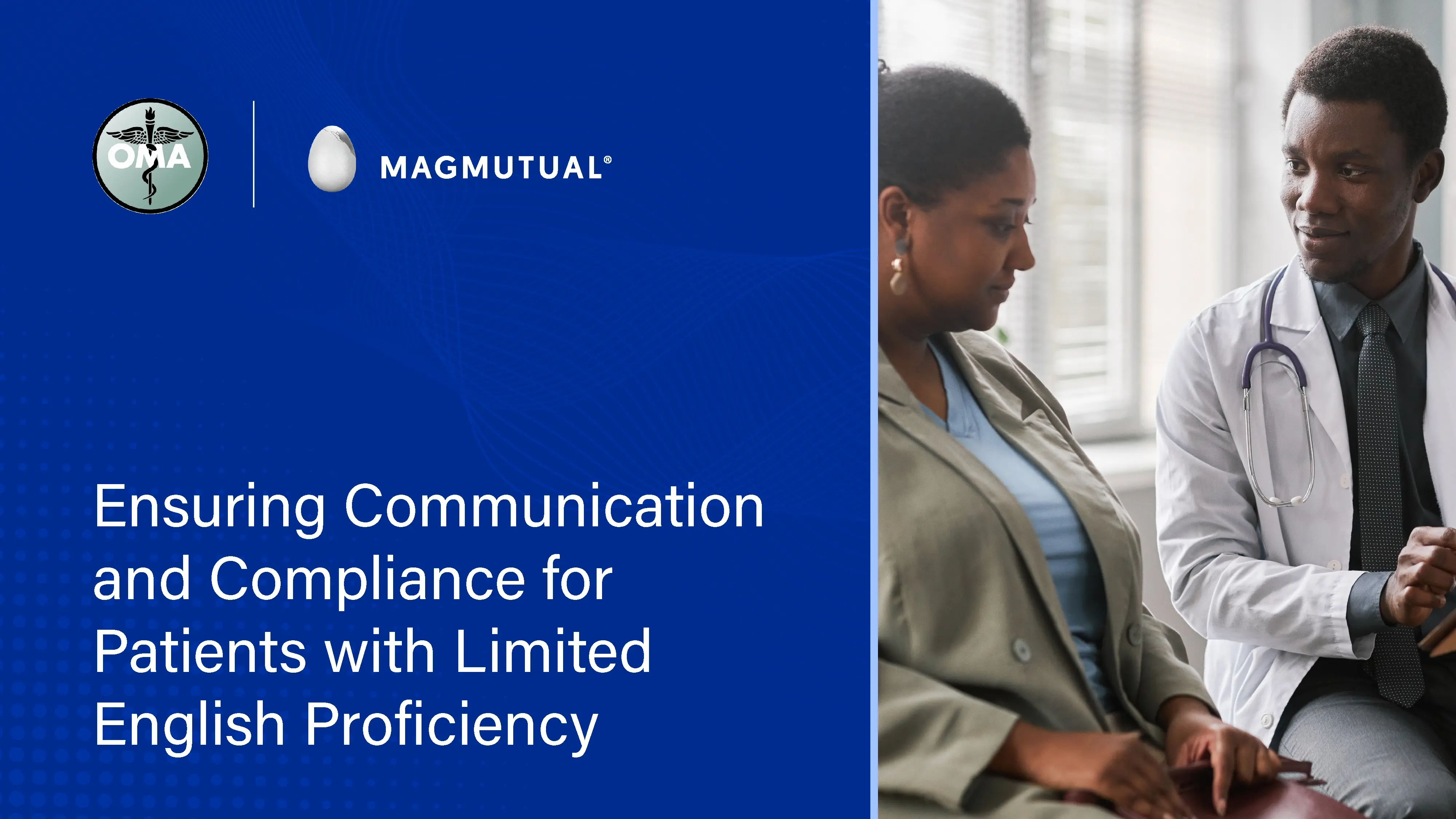
Ensuring Communication and Compliance for Patients with Limited English Proficiency
By MyAdvice at MagMutual
Effective communication is vital in health care, yet language barriers significantly increase the risk of misdiagnosis, delayed treatment and adverse outcomes. Patients with limited English proficiency (LEP) often struggle to articulate symptoms, understand diagnoses or follow care instructions — all of which can lead to malpractice claims.
Understand Your Legal Responsibilities
Federal laws mandate that health care providers take proactive steps to facilitate effective communication with LEP patients.
According to Title VI of the Civil Rights Act (1964) and Section 1557 of the Affordable Care Act (ACA), health care organizations must:
- Provide qualified interpreter services at no cost to patients with LEP.
- Translate vital documents, including consent forms, discharge instructions and notices, into the most common languages spoken in their service area.
- Train staff to identify LEP patients and arrange appropriate language assistance.
- Post notices of available services in English and the state’s top 15 non-English languages in prominent physical and online locations.
- Document each patient’s language needs and services provided in their medical record.
Learn more strategies for providing LEP patients with proper language resources.
Note the Consequences of Noncompliance
The Office for Civil Rights enforces Section 1557. Penalties for violations include investigations, loss of federal funding, fines, damages for harm caused by communication failures and reputational damage. Recent cases involved fines between $80,000 and $200,000 for failing to provide qualified interpreters.
Prepare Strategies for Compliance
To meet federal requirements and reduce malpractice risk, healthcare organizations should:
- Develop and maintain a language access plan. Define procedures for identifying LEP patients, arranging interpreter services and documenting assistance provided.
- Use qualified interpreters and translators only. Verify that interpreters meet national standards of competence and ethics.
- Train all patient-facing staff. Regularly review Section 1557 obligations, patient rights and internal reporting protocols.
- Audit compliance annually. Review posted notices, translated materials and interpreter use records.
- Engage reputable language service providers. Consider established health care translation vendors or free resources provided by insurers for patients with LEP.
- Update public notices each year. Ensure that both digital and physical notices meet display and language requirements.
Broader Impact: Equity and Safety
Beyond legal compliance, providing language access is a moral imperative — enhancing safety, fostering trust and ensuring equitable care. Clear communication improves clinical accuracy, helps health care teams deliver quality services and reduces malpractice risk.
Disclaimer: The information provided in this article does not constitute legal, medical or any other professional advice. No attorney-client relationship is created and you should not act or refrain from acting on the basis of any content included in this article without seeking legal or other professional advice.